Posts

Reading Cats and Dogs: A Conversation with Lili Chin, Sassafras Lowrey, and Zazie Todd

Image
Join three of the coolest and most-trusted companion animal authors as they talk about their writing, share tips, and read from their books.  By Zazie Todd PhD This page contains some affiliate links which means I may earn a commission on qualifying purchases at no cost to you. In celebration of Companion Animal Psychology ’s tenth anniversary, Zazie, Sassafras, and Lili will be in conversation with Kristi Benson. When: March 28th at 10 Pacific / 1pm Eastern / 6pm UK time.  Register here.  In a world full of misinformation about pets, these three authors are championing a more informed understanding of dogs and cats. Their books help you build a better relationship with your pet—and have fun in the process. Get to know the authors, learn what inspires their writing, and have the chance to ask questions at the end. Purr: The Science of Making Your Cat Happy is the feline follow-up to Zazie Todd’s award-winning book, Wag: The Science of Making Your Dog Happy . It...
Fellow Creatures: Serving Up Truth Sandwiches about Dogs and Cats

Image
I've got a new post on my Psych Today blog, Fellow Creatures. Anush Barwa/Unsplash By Zazie Todd, PhD One of the frustrations of being either a pet guardian or a pet professional is that there are a lot of incorrect ideas out there about how to care for or train your pet. Some of them are downright dangerous and may result in a terrified dog or cat and/or in you getting bitten or scratched. The post looks at how we can use something called a truth sandwich to make sure we stay focused on the ideas we want to get across. And I share a few 'sandwich' ideas of my own.  You can read the post here: Serving up truth sandwiches about dogs and cats . Read it and then let me know which topics you think are ripe to be made into sandwiches!

Companion Animal Psychology Book Club February 2022

Image
"Come for the fables and stay for the behavioral research in this jam-packed but delightful collection"--Scientific American. By Zazie Todd, PhD This page contains affiliate links which means I may earn a commission on qualifying purchases at no cost to you. This month, the Animal Book Club is reading Aesop's Animals: The Science Behind the Fables by Jo Wimpenny. From the book's description, "Despite being conceived over two-and-a-half thousand years ago, Aesop's Fables are still passed from parent to child today, and are embedded in our collective consciousness. The morals still inform our judgments, but have they influenced our views of the animal protagonists as well? And, if so, is there any truth behind the stereotypes? Are crows smart enough to reason? Are pigeons so dumb they cannot tell the difference between painting and reality? Are ants truly capable of looking ahead to the future and planning their actions? In Aesop's Animals, zoologist J...

The Best Cat Training Treats

Image
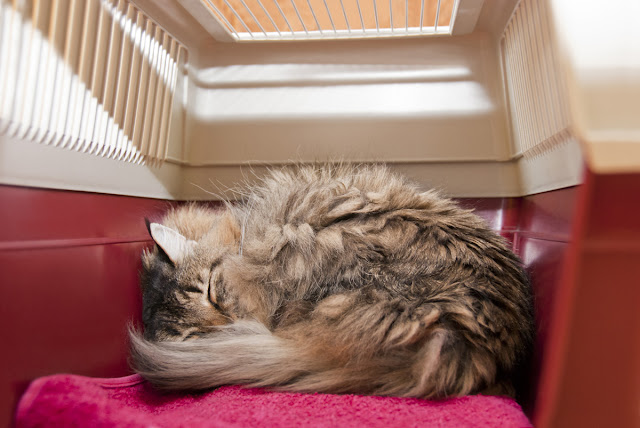
Finding the right food reinforcement for training cats to like their carrier or do tricks. Want to train your cat to like their carrier? The right treats will help. Photo: Konrad Mostert/Shutterstock By Zazie Todd, PhD This page contains affiliate links which means I may earn a commission on qualifying purchases at no cost to you. Whatever animal you are training, it’s necessary to find a way to motivate them. As reward-based trainers, we find something the animal loves to use as positive reinforcement .  Food works to motivate cats just like for dogs , and so it’s a great choice to use in training. Little pieces of tuna, prawn, chicken, freeze-dried meat or fish, and cat treats are all good ideas.  You can also use the wet cat treats that come in a tube or use a plastic syringe to deliver a meat paste. Experiment to find out what your cat prefers. There are a couple of issues to bear in mind. Use the right size treats when training cats One is the size of the food reinforcem...

Your Invite to my Webinar on How to Make Your Cat Happy

Image
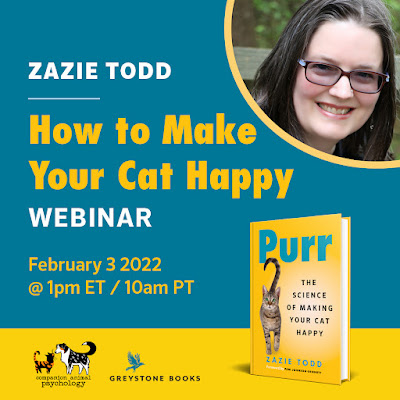
A webinar in celebration of the upcoming book Purr: The Science of Making Your Cat Happy . By Zazie Todd PhD This page contains affiliate links which means I may earn a commission on qualifying purchases at no cost to you.   Join me on Thursday, February 3rd for a discussion of my upcoming book, Purr: The Science of Making Your Cat Happy .  I will be sharing fascinating insight into cat psychology and her top tips for helping your cat lead a happy life. The webinar is free to attend, and will include a Q&A, so come prepared with your burning questions about your feline friends!  A recording will be available and I'll send the link out 1-2 days after the webinar. Sign up here.  Purr will be published on 3rd May in the US and Canada, and on 19th May in the UK and can be pre-ordered from all good bookstores. Preorder from Amazon    Chapters/Indigo    Barnes & Noble    Indiebound    Blackwells    Waterstones ...

Scientists surprised to learn that cats are freeloaders

Image
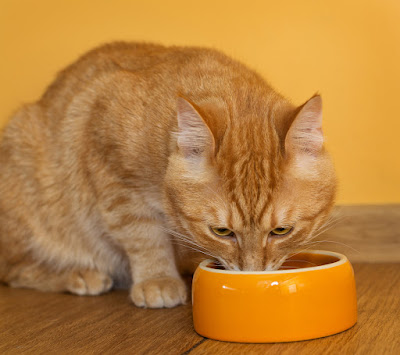
Pet cats prefer food from a bowl rather than a food puzzle toy, study finds.  Photo: Okssi/Shutterstock By Dr. Katherine Cronin One morning last summer I fed Barley his dog food as I usually do, half in his bowl and half in a knobby, pineapple-shaped toy that he has to nose around the floor to release food little by little. Although this time I was in a hurry, and I provided him both the bowl and the silly-looking pineapple at the same time, placing the pineapple next to the bowl as I turned away to start making breakfast for my daughters. A moment later, I heard the sound of the pineapple bumping around the kitchen floor and pieces of kibble scattering out. At first, I was surprised Barley had chosen to work for his food by tossing the pineapple around rather than just eating the same food out of the bowl. Then I smiled to myself as I realized Barley had just demonstrated a phenomenon shown by many animals: the preference to work for food when the same food is freely available. Sc...

Time for Self Reflection? Exploring Developments in Animals' Abilities to Demonstrate Self-Awareness

Image
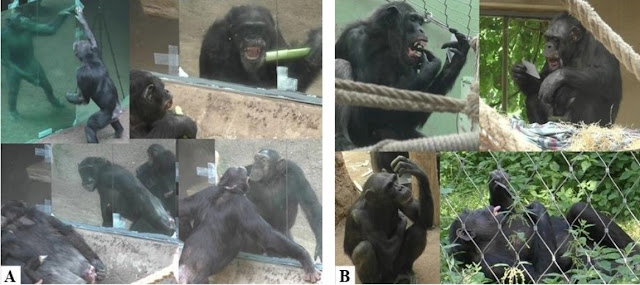
The mirror test isn’t the only way to test for self-awareness—but thinking about the kind of mirror can make a difference to results.  Chimpanzees exploring mirror reflections using large and handheld mirrors respectively. Reproduced from Kopp et al. 2021 under Creative Commons 3.0 License .    By John Binks and Lucie Mellish Theory of Mind (ToM) is the term used to describe the cognitive ability to understand that others around you are their own separate agents that have thoughts, beliefs, or desires that can differ from your own (Premack and Woodruff, 1978; Reznikova, 2007). Previously thought to be an ability unique to humans, the question of whether non-human animal species possess this understanding has gained interest in recent decades (Penn and Povinelli, 2007).  This question is significant because ToM abilities suggest that animals may have greater awareness of the world around them and have sensitivities towards their environment. Animals with a deeper unde...

Follow me!