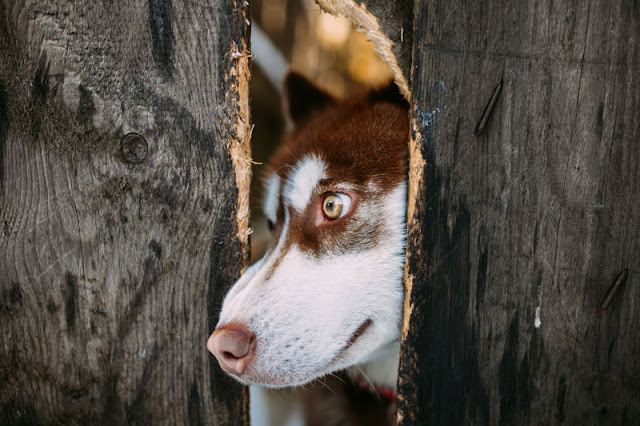
Why Children Should Ask the Dog If They Want to be Petted with Steve Dale
We talk about how to know if a dog wants petting, preventing dog bites, and developments in cat health with radio host and author Steve Dale.

This page contains affiliate links which means I may earn a commission on qualifying purchases at no cost to you.
Watch episode 59 of The Pawsitive Post in Conversation on Youtube or below, listen wherever you get your podcasts (Apple, Spotify) or below, or scroll down to read a transcript.
Why children should Ask the Dog with Steve Dale
Kids are routinely taught to ask a dog's owner before petting the dog. Today, radio host Steve Dale joins us to talk about how they should also find out if the dog wants to be petted or not. We learn about Steve's new children's book, Ask the Dog, which is a fun story with an important message, and we also talk about some good news in cat health.
We talked about:
- Why Steve wrote the book
- The importance of preventing dog bites, and why children are especially at risk
- Why children should learn to ask the dog
- How the relationship between dogs and children has changed over the years
- What it was like working with an illustrator for the book
- The work of the EveryCat Health Foundation and their research on taurine in cat food, FIP, diabetes, and heart disease
- How research on cat health has also benefited human health
Also mentioned:
- The EveryCat Health Foundation is at everycat.org
- Theater of the Mind created by David Byrne and Mala Gaonkar is at the Goodman Theater in Chicago through August 30 2026 https://theaterofthemindchicago.com/
- Steve Dale's interview with David Byrne https://stevedalepetworld.com/blog/conversation-with-david-byrne-booth-46/
- The book Steve recommended is Bicycle Diaries by David Byrne
Ask the Dog by Steve Dale, illustrated by Shelby Koehler, is available wherever books are sold.

Steve Dale is a certified animal behavior consultant, a radio host, and his show Steve Dale’s Pet World is essential listening for everyone who loves pets. He co-edited Decoding Your Dog, written by the American College of Veterinary Behaviorists, and has written and contributed to many other books. Ask the Dog is his first children's book. Steve is the host of Steve Dale's Pet World on WGN radio and also hosts a Sunday afternoon talk show at WGN radio.
Learn more about Steve and sign up for his newsletter at stevedale.tv.
Highlights of the conversation with Steve Dale about preventing dog bites in children and news on cat health
Zazie: When children want to pet someone's dog, they're usually taught to ask the owner. But a new book from Steve Dale says that it's important to also Ask the Dog. And that's the title of the book.
So today we're chatting to Steve about children's safety around dogs. And we're also going to be talking about cats too.
Welcome to the Pawsitive Post in Conversation. I'm Zazie Todd and I'm joined as always by my friend and co host, Kristi Benson. Hey Kristi, I know you're going to love this conversation because we're going to be talking about consent.
Kristi: I will love this conversation. I think this is an important topic and I know I was just telling you earlier, Zazie, but this weekend over Easter, I had a bunch of kids in my house, one of my niblings was gonna go in and hug Archer, my big livestock guardian dog.
So I had an opportunity to talk about consent. Cause Archer does not like being hugged, you know, so this is good. I think this is a great topic
Zazie: That's perfect for this conversation. So we've got Steve Dale with us today. We're very honored. He's a certified animal behavior consultant, a radio host, and his show, Steve Dale's Pet World is essential listening for anyone who cares about pets.
And he's the author of many books, but he's got a new book out now called Ask the Dog, which I'm just holding up to the camera.
Ask the Dog by Steve Dale, illustrated by Shelby Koehler. And this is actually your first children's book, I believe, isn't it Steve? Thank you for joining us today to tell us about it.
Steve: Indeed it is. So I had. Thank you guys. First of all, I am the one who's honored to be here and excited to be here to talk with both of you.
And there I was walking down the street one day, right? And I had our then 14ish year old dog with us, little dog, a chihuahua terrier mix. And she's just not caring about another dog who's like right there.
Because at that age she doesn't care about much and she's just sniffing around at the grass. The other dog doesn't care about me or the our dog being there either, and is just doing the same thing, sniffing around at the grass.
I'm about to leave because our dog was pretty much done sniffing.
And the lady at the end of the leash with that dog, that other dog turns to me, I don't know her, turns to me and says, oh, do you want to pet my dog?
And I looked at the dog and instantly said, no, thank you. At which point she clearly was insulted. But this dog was just looking the other way, standing kind of stiffly.
That's it.
The tail was out a little, not wagging or anything, just straight back.
Steve: This dog was telling me clear to the dog, unclear, I would suggest to many people.
This dog was telling me, uh, and maybe unclear to the dog's owner. Now, I don't know, maybe the dog's owner asked me that question because she was trying to better socialize the dog.
Maybe she asked me that question because she was going to hit on me.
Uh, actually, I don't think that was the case, so forget about it.
Oh, sure, you guys, no way that's possible.
But for whatever the reason, that dog was facing the other direction and clearly saying no, it could be that that dog was hungry and home was in that direction.
I don't know why the dog didn't want to interact with me, but I thought of instantly two things as to why it really doesn't matter why.
One, this dog might have said, I don't want to interact because I'm not really friendly, maybe afraid of people, maybe cautious about people. I don't know.
The other reason might be just because don't dogs. And this occurred to me and I don't think it's been talked about a lot who are sentient beings. The courts are now saying so in America.
So don't dogs have the right.
I still put air quotes around it, but I shouldn't, have the right to say no.
Just say no. It doesn't matter why.
And it comes at a time when this hit me where I knew dog bites. And today for sure, dog bites are in America, likely at a record high.
We don't know dog bite numbers for sure. They're kind of squishy because all dog bites aren't reported.
So most dog bites are many.
Many happen within homes and unless there's a needed hospital stay, they may not be reported.
Hospital stays are up. Insurance claims are way up for dog Bites is America's litigious society, in part May, but generally they are.
In addition, dog bite fatalities are at a record high, according to the Centers for Disease Control.
So knowing all of that and believing that if we paid more attention to what dogs are telling us, maybe there would be fewer bites, I thought about writing about this. Now, I didn't think about writing a children's book.
I've never done one of those.
But coincidentally, as I was thinking about this, a children's book publisher called and said, hey, you want to do a book?
Well, maybe not quite that way, but that's the essence of what she said.
And I said, you know, I actually do have an idea.
Kristi: That kind of covers our next question, which was why. Why a kids book? But I think. I think the topic of consent and kids, and this occurred to me as I was talking to my.
My nephew on the weekend, talking about consent and kids. Consent to kids is so important. And so I'm curious about, you know, how your thought process about that, that. How that evolved.
Steve: Well, kids get bitten more often than adults do, and the most significant bites often happen to children, likely just simply because they're at the height that is very convenient for a dog to bite at, a face.
They don't have to jump up to do it if they're small kids.
So part of that is for that reason, but part of it is because kids aren't reading dogs necessarily.
Adults don't always either.
And I figure, okay, a kid's book is good because in many cases, an adult will read it to the kid and maybe the adult will pick up something from it.
And I make some definitive, somewhat perhaps controversial statements that you guys, who are quite expert yourself, can comment on in a minute.
But I thought a kid's book would make maybe more sense. I'm not sure that I answered your question, though, Kristi, but I have a question for you.
And that question earlier, you said something, and then you said, my niblings.
Is that something like you have with turkey and gravy? What are niblings?
Kristi: It's a gender neutral term for nieces and nephews. It's like siblings, but with an N.
Steve: I did not. I did not know this.
Kristi: I love it because I love it that it's gender neutral, but I also love just how deeply affectionate it sounds.
Zazie: You know, it does, it does.
Steve: It also sounds like with a turkey dinner here.
Zazie: But anyway, no eating the niblings anyway without consent. Yes, they don't consent to be eaten.
I love this book, and I love the way that you talk about consent in it.
And I, you know, I really enjoyed reading it. And I was showing it to Kristi just before we started this and telling her how much I love it. It's certainly a book that I'm going to be giving to some of my niblings,
who I know will like it. So why do you think it's so important for children to know to ask the dog? Because in the book we get to see different dogs and whether or not the character, the child in the book, Morgan, can pet them.
Why is it so important for children specifically to know to ask the dog?
Steve: So the notion is a little girl named Morgan is walking through a big park, and in that park she encounters many dogs, dogs of different personalities and dogs of different sizes.
And mom, who clearly could be one of you, is quite expert when it comes to reading dogs and is teaching Morgan, okay, this is what you do. This is how you understand what the dog is communicating as she teaches Morgan how to speak dog, essentially.
And it's important for kids because, as I said, kids are most often bitten by dogs. And many of the severe, most severe dog bites in America anyway happen to children.
So that is why. But I also thought, okay, it's mom or dad or both that are reading to their child. So. Because I was thinking of doing a chapter for one of those veterinary books that I often could contribute to initially, but I thought maybe I can reach more people this way, and it doesn't mean I can't do the other thing.
And I hope to at some point, because I think I'm onto something here. Dog Bite Prevention Week, which occurs in April. I've been a part of the American Veterinary Medical association initiative.
That is wonderful about that. But I'll tell you, there have been two initiatives, might be the right word, might not be, that have programs, platforms, ideas that have supported dog bite prevention in the past 50, 60 years.
One is simply the importance of socialization.
We didn't know that John Scott and John Fuller, in the 1950s into the early 60s, discovered this and wrote about this.
But we actually. It's hard to believe that we didn't understand that there's a certain period of critical or primary socialization in puppies that is something no one knew about. And these two scientists figured that all out, and then they wrote about it in their journals, scientifically.
And by the way, I had the interview. I had the opportunity once to interview John Scott. He was in his.
Zazie: Wow
Steve: Yeah, he was in his 80s at the time, living in Chicago, where I live.
And I had the chance to meet him and interview him. And I was thrilled. And he gave me some of his little publications that he. He wrote. And it was just an honor to meet him because we learned so much about what we didn't know.
And then others came along and used that knowledge, like Dr. Ian Dunbar, and said, puppy classes, when a dog is a year old, that makes no sense. Let's do it when they're really puppies. And here's why.
So all of that, the idea that socialization is as important as it is, though many dogs are still way under socialized or, and I could talk about this over socialized, by the way.
So that's one thing. And then the other is Dog Bite Prevention Week that the AVMA came up with decades ago.
All of these ideas, both of those ideas are very, very important, you know, to communicate. We can do things to prevent dog bites. That's part of the reason why I wrote the book.
But that's not been enough. If dog bite numbers are going up, and they are, then how can that be enough? We need to do more. And by the way, the number of dogs in America, but I believe in Canada, throughout much of Europe as well, has never been so high.
But the number of dog bites has overrepresented what that increase is in the number of dogs. And to me, that's kind of scary.
And even if you're watching or listening to this and say, somehow, some way, I don't care about dogs, I wonder why you're listening or watching this. But beyond that, the repercussions are significant for society, because if dog bite numbers continue to increase, it means veterinary clinics pay more for insurance. It means that restaurants that allow dogs on outdoor patios may have insurance companies that say, uh, no more.
That corner store, the stationary store, are there still such things that allow dogs inside the store? Their insurance carrier may say, uh, you can't do that anymore at all.
I was very much involved, very much involved in fighting against breed bans. And it was mostly pit bulls and fill in the blank, another breed and testified certainly here in Chicago, to fight against it and won.
But in other cities as well, I did the same. And I worry that that's going to come back, because when you read about a dog bite, if it's a golden retriever that bites, it's a dog bite.
If it's a miniature poodle that bites, and yes, sometimes they can. It is a dog bite. If it is a dog that has a big forehead and a blocky sort of face and wide shoulders and looks like it's usually a mixed breed.
We know that now, but is something that we call a pit bull, then it's a pit bull bite according to what you read in social media or the press. So I worry that that can happen all over again.
If dog bite end, our homeowner's insurance is going to go up. And the idea of homeowners insurance going up, at least in America, I'm paying more because I live in Chicago. As I said, there are no hurricanes here. However, I am paying for the hurricanes in Florida. I'm paying for the fires in California because it's all shared.
And as the insurance claims go up and they are way up as a result of dog bites, then everybody across the board pays for it. And I could give off a litany of additional reasons as well. So it really does matter for society. And as we become more dog friendly finally in America, I'm concerned that we're going to move backwards as a result.
Beside this, cynophobia.
Isn't it fun to interview a radio person who, you ask one question? He goes on for three hours, sorry,
Cynophobia, which is the fear of dogs, has never been so high according to the American Psychological association.
And that is as a direct result of dog bites.
Dog bites aren't good for dogs either. Obviously, if that dog is euthanized, that's not good for the dog. But dogs who. And you guys are expert at this as well.
I don't think any dog wakes up in the morning and says, I want to attack the people I love or I want to attack the neighbor who I never did love.
They don't wake up thinking that they are dealing with their fear or anxiety the only way they know how.
And in most cases they've tried these other methods and greatly we haven't picked up on it.
Sometimes we don't care. Some dog owners don't care, but most do.
And very few people want the trauma for their dog. And it is traumatic, I think, and it's often underlooked for dogs as well, clearly, as for that person who lands in a hospital.
So there are just so many reasons why this is such a passionate issue for me.
Kristi: I know you were talking a little bit about sort of like the last 50 to 60 years and sort of changes that have happened. And I think it's interesting to talk about how the culture has changed between kids and dogs and their relationship.
So how do you think it's changed over the last like 50 years? And do you think that this is good for kids and dogs or not?
Steve: Well, sure, I think it's great that we have a bond with dogs and we consider them family members that we share our beds with our dogs. Dog bite numbers have gone up.
Is it because they're sleeping in our beds more often? No, that's got nothing whatsoever to do with it one way or the other. It is a whole long list of other reasons,
some of which I described. We're not reading dogs well, but there are other reasons as well which, and we know from a study from the American Veterinary Medical association and Centers for Disease Control and Prevention, and at that time they called themselves Humane Society of the United States, why the most significant dog bites occur.
We know why that happens and I can go through them if you want me to as I hopefully remember them all.
However, it is not because we have a bond with dogs as we treat them. There are downsides, I would argue.
I think we can become over bonded with our dogs, if you will, for lack of a better way of putting it. I think treating dogs like children doesn't benefit dogs in any way.
But I'm not sure that's why dog bite numbers are up.
And I don't believe that having a Lassie Timmy relationship, you guys are too young to know, but having an intense bond,
I don't think there's anything better than a child growing up with a dog. It is a beautiful thing to watch your niblings grow up with dogs. I think that's wonderful.
I don't that that's got anything to do with any of this, and I think that's only positive.
And we know, we know how many benefits that dogs have for us. Health benefit as a result of living with dogs. But there is another side to that human animal bond as well, and that's kind of what I'm talking about.
Zazie: I did watch Lassie when growing up and I also used to like the Littlest Hobo very much so.
Steve: The Littlest Hobo?
Zazie: I think that's Canadian.
Kristi: Canadian. Americans are not familiar with the Littlest Hobo.
Steve: No, I didn't.
Zazie: You missed those. You did miss those.
Steve: My neighbor called me that last week, but I didn't know what he meant.
Kristi: If you're referring to the show, then it's a great compliment.
Zazie: It is, definitely.
Steve: Somehow I don't think they were because this person's never been to Canada, but that's okay.
Zazie: Oh. Oh, well, never mind. They missed out too.
So the book, I'm going to hold it up again so we can all see the cover. It's illustrated by Shelby Koehler and it's really beautiful. Illustrations as well go with the text that you wrote.
Yeah. What was it like working with an illustrator? Did the publisher choose the illustrator and how did that go?
Steve: Yes, the publisher did choose the illustrator. Now would I choose that illustrator again? Absolutely. I think she did it.
Yeah. Terrific job.
In fact, from what I'm told, she might even get work as a result of this book actually, as people have.
Yeah, I mean, she was great. But what I would do is I would say, because she clearly is interested in dogs and likes dogs, but I would say, okay, the tail is in position the right way or the dog should be standing this way or that way to make my point.
And then she would go ahead and adjust her illustrations and she just did it very, very well. But I did not know her and the. I really very rarely communicated with her.
It was through the publisher or through the editor of the book.
Kristi: So, like the process of having your thoughts and ideas and words turned into art,
I just think that's a cool thing. I think it's a cool thing to, you know, to, to hear about is somebody who's never worked in that realm. So it's, it's interesting for sure to be like, we didn't even talk, just through the publisher, like,
but it comes together as this thing, you know, that, that you, you consume it together as a reader.
Steve: Yeah. I was kind of specific though. I mean, in writing my initial copy, unlike the books that Zazie has written, there'd be no need for this, but I wrote, okay, this is what I want the dog to be. Mid sized dog.
I was very specific and in one case I actually thought of a friend of mine because it was an old man holding the dog who told terrible jokes.
So I specifically had very specific ideas in my mind and tried to anyway describe them the best I could.
Zazie: Very cool.
Kristi: So one of the things that we've been taught about when you're educating people is to try and distill down one message. Like if they learn nothing else, you know, what, what do I want them to walk away with?
This one nugget, you know? So what would you say if they learn nothing else from your book? What would you hope that the kids are and the adults reading it are walking away with?
Steve: So I could think of three messages. But the overriding message is take time to better understand how to speak dog, because dogs are communicating with us all the time.
So even a way that dog lays down beside you as you're watching this, then that dog is communicating. I'm comfortable that dog may be communicating. I'm Actually hurting that dog may be communicating.
Take me out for a walk already. I mean, that dog can be communicating any number of different things, even the way that dog is laying. And we often take those things for granted.
We don't either pay much attention to them, or we do understand them and don't pay much attention to them. So either which way.
I think we need to pay more attention to what dogs are telling us. But the other two specific messages that we haven't talked about, and one of them is among some. But both of them may be controversial.
So we've all been taught to, okay, you see a dog you don't know walking down the street, kids or adults for that matter, ask, can I pet the dog?
Okay. Beyond that, then you're taught to hold out your hand and actually put your hand essentially in the dog's face. And what I'm saying, and I've not seen this said elsewhere, and I'm curious what you two think about this. I'm saying don't do that.
I mean, the whole notion of that is that the dog can then sniff you and determine, I guess, if you're friend or foe or what. But you don't need to do that.
So I can stand 15ft away. Well, maybe not 15ft, but 6ft, 5ft away from a dog. You guys do meters. I have no idea what that is, but
Zazie: We do both.
Steve: Okay, so however far that is, the dog can smell you. You don't need to do that. And I have always felt, okay, let the dog come to you.
If the dog is interested in you, that dog will say so. If the dog is benign,
if you will doesn't care one way or the other, that dog will say so. If that dog is not interested in you or is less likely to be, that dog will say so. So let the dog say so.
I'm curious as to what you both think about that.
Zazie: Yeah, definitely. Let the dog decide. Once you can read a dog's body language, then you know if they want you to. To approach them or not, or if they're likely to approach you.
But I think part of the problem is that a lot of people don't. It takes expertise to be able to do that. And I think for younger children especially, they're still learning how to read body language.
We know that they can make some common mistakes, so it's hard for them to know. But I think it's definitely a very important message.
Steve: And part of that message, Kristi, is that I don't believe putting your hand in front of the dog's face like, this is helpful. I mean, dogs, I think, are incredibly tolerant of things we do. And this is yet another example.
Incredibly tolerant of things we do. Because if the dog is not as friendly as you're thinking, you're setting up that dog to bite you on one level. On the other hand, at the very least, you're being rude.
I mean, you know, I, I just don't understand who came up with that idea or why, but I don't think it's a good idea.
Kristi: And also, like, as far as places to bite your hand, you know, it's very delicate. It's got lots of important structures. You use it a lot. It's just. Yeah, I think there's a lot wrong with it. And I agree that, you know, what we've been taught as dog trainers in the program that we went through is to call the dog to you.
You know, call the dog to you, and then the dog will let you know immediately. It's very clear, you know, they either come up and want pets or they. They don't and.
Or they leave. Yeah, I think. And I think it's, it's. I think it's something that we could also focus on a little bit, is just being like, fine when a dog doesn't want us to pet them.
You know, it's hard because we're all dog lovers, right? But lots of times I'll be like, hey, dog. And the dog walks away, and then, you know, you're left, like, you know, standing alone at the party again kind of thing.
Steve: But I think what you just said there is really incredibly important.
And with our own dogs, we're often not fine with it. So we grab that dog and hold that dog tighter and tighter as that dog wants to let go, as we're holding the dog watching some reality show on TV or something.
So that dog is definitely being patient. It doesn't mean that dog will bite you, your own dog. So it's not only a matter of dog bites, it's a matter of respect, I think.
Kristi: Yep. Yeah, I agree. And I think, you know, enthusiastic consent from dogs is really what we're looking for, especially when we're talking about invasive handling like hugging and stuff.
Steve: Ah, that was the other thing. So hugging is the other thing. So dogs are not primates. But little kids don't know that. Little kids want to hug anything and everything, hardwired to do it.
But dogs don't appreciate that. So some dogs over time learn, okay, I get attention from those little people. I love the niblings. If I allow this weird thing to happen called a hug, other dogs are kind of okay, whatever, but other dogs really don't like it.
And as dogs age, we now know that they suffer arthritis much more than we ever thought they did. Dogs can suffer ear infections. Many, many breeds have that every day, it seems. And dental issues, believe it or not. And for any of those things, they're in pain.
So no wonder why the dog turns and lashes back, even at people the dog loves if the dog is hurting, even if the dog is not hurting. As I said, dogs aren't primates. They really are not understanding necessarily what a hug is about. So there's a national hug your dog day.
And I say, no, no, no, no, no, no. We should. We should fight this in the streets and protest.
Instead, I say national love your dog day. I'm fine with that.
Zazie: I like that phrasing.
Kristi: So we, we don't want to just, you know, we're. We're a multi pet program. So we don't just want to talk about dogs. We want to talk about cats, too. Especially Zazie. Zazie's the cat icon in this screen, I think.
Because you're involved with this every cat health foundation. Can you tell us a little bit about the work that they do?
Steve: Okay, so if anyone has a cat, that cat.
Kristi: I have a cat on my lap right now.
Steve: I don't see it. But that cat,...
Kristi: He's down here.
Steve: Yeah, I'll trust you.
That cat is benefiting every day from research that we have funded. So this nonprofit organization, the only one like it on the planet, as far as we know. I've been on the board for 22, 23 years, something like that. They can't get rid of me, I guess. I don't know.
But this organization that funds cat health studies is responsible for about everything we know about cats. Everything. Everything from vaccines cats get or sometimes don't get, to illnesses cats get or hopefully don't get.
So some very specific examples in the 1960s, before any of you were born. And don't argue with the guest, at that point in time, cats were getting sick and sometimes dying of dilated cardiomyopathy, a kind of heart disease.
And researchers at that time, veterinary cardiologists, that was kind of a new thing. But researchers, the cardiologist included, were thinking, oh, there's gotta be some medication. There has to be some pill we can end.
A cardiologist named Dr. Paul Pion came to us. He was a veterinary student at the time, actually, in cardiology. He was a veterinarian already, and he said, I think there isn't enough taurine, which is an amino acid that cats, unlike dogs or people, cannot produce on their own. I don't think there's enough of that in cat food.
We funded that study, and he went about and proved that he was right. And ever since then, pet food companies all over the world now have enough taurine in cat food, because we know how much taurine is needed in cat food.
We also sometimes see this. So this dilated cardiomyopathy thing has pretty much gone away, except when people create now their own cat food and don't include enough taurine in the cat food that they're making for their cat.
Very recently, much more recently, feline infectious peritonitis, or FIP, was considered fatal for decades and decades since it was discovered in kittens. Mostly can happen to cats of any age, but mostly it happens to kittens, which makes it all the more tragic, fatal.
So when a veterinarian would diagnose, and it was very difficult to diagnose at one point in time because it wasn't understood, but when it was diagnosed, I mean, you're telling this person who just got a kitten, maybe because their other cat had passed away, oh, this kitten's going to die and probably soon.
So Dr. Niels Peterson, who we have funded many, many times, University of California, Davis, who is now a professor emeritus, he's now retired, and others around the world, we funded to first better understand this disease, but hopefully ultimately come up with a solution. And it turned out in the year 2017, I believe it was, at University of California, Davis.
I was the guy, as we brought all these people together from around the world who studied FIP. Everybody who studied this disease that was still alive, we brought into this one meeting at UC Davis, and the consensus was that we now are considering FIP treatable.
And to look up in the room and to see these hardened veterinarians from all over the world have tears in their eyes, because who would have ever thought that could happen? And led by Dr. Peterson, again, many others as well, it did happen.
What's more, there's more to the story. Do you want to hear more to the story?
Zazie: Yeah. Go on.
Steve: Okay. A very cool part of the story. This was 2017 or 18, somewhere in there.
And then a couple of years later, or a year and a half later, the pandemic hits and our government.
So let me back up one step. FIP is caused by a coronavirus. It's a mutation of the coronavirus that occurs inside the cat. So the coronavirus in cats is pretty much benign.
Kittens usually get over it very, very quickly if even there are any signs. However, every now and again, it does this funky mutation inside the kitten or inside the cat and transforms itself into an immune mediated disease called FIP.
That's interesting to note and important as a backdrop because when the pandemic hit, our government had. There's. How many antivirals are around? There are many.
So our government, desperate for more antivirals, they tried this one, that one, they tried some. They didn't really work against the coronavirus that was killing human beings around the globe that we call COVID 19, or the illness we call COVID 19.
Well, it turned out there was one drug that did have some efficacy. And they looked at that drug based on papers written by Dr. Peterson and others having to do with this drug working for cats.
And I was able to make that announcement, or not that announcement. I was able to describe what happened myself to Dr. Anthony Fauci.
I had the privilege of doing that. And he totally understood. The drug called Remdesivir is to this day being used for people as well as kittens with FIP.
So there's another drug based on that drug, Remdesivir, and other drugs that are far less expensive, that work for kittens and far less complicated to use for cats. But people that are hospitalized still, and there are some that are still hospitalized even now as we speak with COVID those people are sometimes treated with remdesivir.
And certainly when the pandemic was at its height, many thousands were. That never would have happened and lives would have been lost if it wasn't for the every cat health foundation, the board I'm on, if it wasn't for Dr. Peterson saying, oh, this drug can work just like that. And if it wasn't for kittens getting FIP in the first place. So we can thank cats for saving human lives.
Another thing that I want to jump in there and say is that I had a cat. I believe in training cats when you can, because why not? And they've got a brain.
So I had a cat that played the piano about 25 years ago named Ricky. And this cat was amazing.
I love to talk about the human animal bond taught me so many things about what cats can be.
But then he suddenly died of another kind of heart disease than the one I talked about earlier called hypertrophic cardiomyopathy, which is incredibly common in cats.
Again, wasn't greatly understood. So I began a Fund called the Ricky Fund. And we raised money to better understand and hopefully come up with a treatment. And by golly, a couple of years ago, just a few years ago, two years ago, I was at a veterinary conference, tap on my shoulder,
I turn around and these people say, thank you.
And I said, you're welcome. Who are you?
And they said, well, we are a company in Ireland who, based on the studies that you've done, have come up with a treatment that we believe will help cats with hcm, or feline hypertrophic cardiomyopathy, at least before signs occur. So if you can get them to the veterinarian before the symptoms occur and it's diagnosed at that time, preclinical is called, then this drug can help. And the drug has since been approved conditionally by the center for Veterinary Medicine, Food and Drug administration in the U.S., it's called Felisin 1.
And it's amazing that this drug will save lives because this kind of heart disease in cats is truly a killer and probably the number one cause of death in adult cats that are indoor cats.
That's how common it is until at least they reach the senior years when kidney disease cancers take over. But it's right up there with kidney disease and cancers because it occurs often in older cats specifically, but in younger cats too.
And now if you catch it, we have a treatment. What's more, we better understand it.
So hopefully other treatments will come along too. So I remember getting the emails and snail mail because some of this was before email saying, oh, you're wasting your money to try to raise money to do anything like this. And, well, anything like this has happened.
So we have a newsletter, visit everycat.org to learn more about this organization that I'm so proud that I've been a very small part of.
Zazie: I'll put that link in the show notes so that people can go and sign up to their newsletter and learn more about what they do. And you've just shared some amazing examples of what they do and also how there's such a link between the health of our pets and human health as well.
You can see why people talk about one health so much. So that's really cool to hear about. And ahead of this, I also went and looked myself at the Every Cat foundation website, and I was looking through all the different things. There's a long, long list of things that, that you funded research on. And I was struck by how many of these are things that my own cat over the years have had benefited probably from some of this research as well, so you mentioned the taurine in pet food, but I also saw a section on asthma in cats and a section on high blood pressure in cats.
So I think it's very, very cool. If you were to pick one more thing to tell us about the work that they do for cats, what would it be?
Steve: That's hard because, I mean, high blood pressure is one. Because we didn't even know that how to read blood pressure in cats or what that meant or anything like that.
We had diabetes. Diabetes. Wrong. Veterinary medicine did. They had it backwards or this way, or it wasn't quite right. And today we better understand it. And we just launched, and this is the one more thing the O'Malley Fund, it's called, which Kara Burns, who is our incoming chair of our board, launched. And she had a cat that was resistant to insulin. Acromegaly is what it's called. And the result of that is that at some point, her cat just passed away named O'Malley.
And not only for diabetes, but hyperthyroid disease.
Those are very, very common in cats. And we can do something about it. We need to do something about it so we can treat. I'll take the part about diabetes first.
We can treat it effectively for many cats, but some do build up resistance to insulin. Then you can't treat it anymore. And what happens. The other thing is that treating it costs money.
So these cats are not diagnosed always at the age of 21 or something, and they only have a year or two to live. They are often diagnosed as young cats. So that is a lifetime of a special diet that cost. A lifetime of insulin that cost.
Now, some cats, we now know, actually it reverts. The disease does. So if they can be put on that special diet. Lose weight.
Lose weight. Huge factor. Huge.
Hmm. I didn't mean to quite say it that way. It's a huge factor in these cats that it's now almost at epidemic proportions.
So the O'Malley Fund is determined to find a way to do something about this.
And also, as our cats are living longer than ever before, we're seeing more hyperthyroid disease in cats, which is a disease of generally older cats. And while, again, there are treatments for that, wouldn't it be better if there was prevention for that?
So all of this is something that this fund is going to contribute to. So that's. And when we've had special funds before, we've been successful, you know, but we have studies out now on kidney disease, on cancers, on all sorts of things. And a lot of what we know about Outdoor cats, community or feral cats and their behavior, how often they reproduce. Early spay neuter, Pediatric spay neuter was thought to be, oh, you can't do that with cats. Blah, blah, blah. Well, it turns out you can potentially far earlier than dogs.
And again, study from the Every Cat Health Foundation. So I could bore you for hours about all of these studies that we have funded over the years or studies we are now funding that will make a difference or have made a difference in the everyday lives of every cat.
Zazie: Well, I think it's good to hear what a difference it's making, and I'm certainly very grateful. And you mentioned diabetes. I've had a cat with diabetes. You mentioned hypothyroid. I've have a cat who was recently treated for that.
So I think, you know, it's such a huge difference for cats.
But as we come to the end of our interview, we have to change subject again. And we always like to ask people to recommend a book to us. So what have you been reading recently that you loved?
Steve: Oh, that doesn't count because that's my book. Oh, sorry, I must have held up the wrong.
Zazie: Hold that up, too.
Steve: So one thing I saw for 20, I don't know, 24 years, I think, on the radio on WGN in Chicago and other radio shows over the years,
I've hosted, you know, and I talk to great people on the radio. I am so fortunate to talk to the best in veterinary medicine from all over the world, animal behavior, all of that.
But I also host a general pet show and a podcast on WGN as well, where I talk to celebrities that come to town. I talk to public officials, politicians. I mean, I talk to book authors and everything else.
I just had the opportunity to interview a guy by the name of David Byrne, who's a rock star, formerly of the Talking Heads.
And when he comes to town, no matter what town, and he has a show that premiered actually in Denver, but is playing in Chicago now, and it's called Something of the Mind. My mind isn't thinking of it, but Theater of the Mind, maybe, but. But he comes to town, any town.
Like this guy I was talking to said I was going to a show, Theater of the Mind. And. And he was going to a show and he was in a Uber Lyft, and he looks out the window and David Byrne is riding his bicycle right by him.
Not his bicycle. One of those rent a bikes that cities have now. We call them divvy bikes in Chicago. Well, this book is about David Byrne traveling all over the world and hopping on a bike in various cities and his impressions of what he sees in these cities as he's riding a bicycle.
So as that's him on the bike, I suppose so. It's an interesting read, actually, because you get a different impression of cities, I think, when you walk them or on a bicycle, as opposed to just hopping in a Uber or even if you rent a car.
So that's what that book is about. [Bicycle Diaries by David Byrne]
Zazie: Very cool. I like the sound of that. Thank you. And now, please, will you hold up your book as well, because today we've had Steve Dale with us talking about his book Ask the Dog.
And now he and I are both holding up the book to show this beautiful cover. It's a really fun and engaging book and it's got a really important message in it as well.
So thank you for writing it, Steve. Like I said, I'm certainly going to be giving copies of it to some of my younger relatives. So I think it's an important book for children to read and a good message for the adults to know as well because you get to learn so much about dog body language and when it is safe to pet a dog from it.
So thank you for coming to tell us about it. Your book is available wherever books are sold, as they say.
If people want to know more about you, where do they go?
Steve: Stevedale.tv. And you could sign up for my newsletter there too.
Zazie: And I am signed up to your newsletter. I recommend the newsletter as well. Definitely. For sure. Thank you. Thank you so much for joining us today.
Steve: I gotta go say hello to niblings.
Zazie: Okay, a special shout out today to our listeners in Dallas, Texas. Thank you for joining us today. Wherever you're joining us from, please subscribe so that you never miss a show in future and we'll see you next time.
Bye bye everyone.
This transcript has been lightly edited for content and style.
As an Amazon Associate, I earn from qualifying purchases.