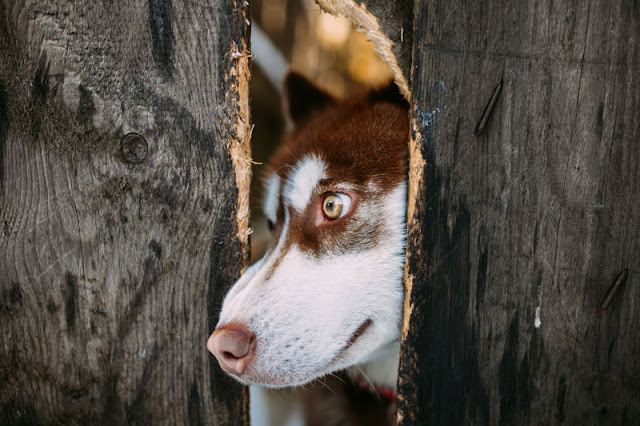
Zazie and Kristi chat about how to ensure all the dogs are happy when you have both senior dogs and a younger dog (or puppy) in the same household.
Having both a senior dog and a young dog in the same home can be wonderful, revitalizing the older dog and providing company for the younger dog. But it can also have its challenges. Zazie and Kristi talk about how to make sure everyone is happy and stays safe.
Z: Hey Kristi, why should we talk about senior dogs and young dogs as a training issue?
K: Yeah, I think it's the thing that interests me about it is that it, it's both the same and different as regular dog dogs. When I say regular dog-dog I mean just like any two dogs might have issues that need training or management, but senior dogs versus younger dogs, especially puppies,
can come up with sort of a new host of problems that we don't usually see. But then we can sort of predict if we. Most of the time it's fine, you know, to have these two combinations together but if we have issues, I think there's a couple of sort of types that we see over and over again that it's worth I think speaking about and sort of unpacking a bit as a,
as a training issue, as a management issue to help people who are experiencing this.
Z: Yeah, I think so, definitely. Because you have to sometimes give a bit of extra thought to senior dogs. I mean senior dogs need a bit of help,
extra help sometimes anyway, even if they're the only dog in the home. So that kind of is an extra dimension mention to a multi dog household, I think.
K: Yeah, for sure. So have you yourself had senior and young dogs in the house at the same time? Has that been something that you've had?
Z: Yes, and I think with Ghost and Bodger it wasn't that way to start with. But Ghost was a very big dog. And he was a bit older than Bodger. And so he aged quite quickly, really.
And he had a lot of health issues, which didn't help.
So when we had both of them, and they were young and energetic, and we could walk them both together, and they seemed really well matched, and that was really good.
But then Ghost got older, and he had issues, Especially with his legs, and he just didn't want to walk so fast anymore. But also he was always into sniffing, and he would want to stop and sniff everything.
And Bodger would be like, go, go, go. You know, just wanting to get a move on, keep on going, get to the next place all the time.
And so there came a point when, really it wasn't a good idea to walk them both together because they both would be frustrated. One wanted to go and the other wanted to go slow in between.
Didn't work for either of them. And so it became better to take Bodger out separately For a faster, longer walk, and then Ghost for a slow walk.
And that made sure that they each got what they needed out of the walk. But it also, of course, meant that walking them took twice as long because they had to be separate walks.
So I think that was the main thing with those two. It was getting the walk sorted out because they were great friends to each other. So there were never any issues with them getting frustrated with each other or anything like that.
K: So.
Z: Yeah, And I think you've had some older, young dog combos in your home, too. What kind of combos have you had?
K: We've had pretty much every single combo, I think, that you could possibly imagine.
When we had sled dogs, we had so many dogs in our house. So we did have quite a few.
Had puppies come into our family as, you know, quite young puppies, as eight weeks or, you know, two, three month old puppies Come in with dogs that were adults, but also with dogs, Dogs that were seniors.
So we've definitely had that dynamic.
We've also had the dynamic of, just like you were saying, when you have a dog who's a little bit older, who gets into that elderly phase and starts to have experienced physical issues, We've had problems around that, too, that we've had to train and manage for.
So I think we've kind of had it all.
We had adult dogs who were very dog social, but didn't like puppies, which I think I'll probably say again, is not that uncommon.
You know, maybe it's not very common, but it's as far as behavior issues. We hear of as trainers, it's not something that makes you go, oh, my goodness, I've never heard a dog with five legs.
You know, it's not like that level. Yeah. So I think we've had it all.
Z: Yeah. Some puppies is an extra dimension in there, I think so. I think it's actually fairly common that once someone has a dog, like if they have one dog and that dog is starting to get old, it's fairly common for them to think of adding another dog to the household and likely a puppy as well.
So do, do you think it's fair to bring a new young dog into a home with another dog? And what should people think of if that's what they're considering?
K: Yeah, I think that one really is going to come down to it depends on the dog.
So if the older dog enjoys young dogs, maybe not puppies. Puppyhood doesn't last that long as much as it features in our memory of young dogs.
But does your dog enjoy the company of other dogs, even if your dog isn't that active of a player?
Is this a type of dog who likes other dogs, who enjoys the company of young dogs, who gets a little bit wrapped up by them, who just enjoys, you know, maybe that, that, that relationship?
Or is this a dog who really kind of likes having their own space, doing their own thing, maybe growls off younger dogs?
What we really need to focus on is what's going to be best for the dog that's in the house already, not what's going to be best for the humans in the family, what's going to be best for the puppy.
It really, you really need to focus on. I mean, yes, the humans matter, you know, but also we really need to, we can't make our old dogs lives worse. They have to either stay about the same or get even better with a new dog being brought in. So,
and I think a really good point was you having to walk both your dogs separately. That's not that uncommon when you have dogs, especially with a big age difference or really different types of dogs, you know.
So can your family as a humans handle the needs of two separate dogs? So if the dogs gel and immediately become one blobby dog and you can handle them together, that's great.
But if you need to act actually all of a sudden, have double the work, double the training, double the walking, double the. You can't take them to the vet together, maybe, you know, do you have the time and emotional sort of availability within the humans in the house to handle having two dogs These are the kind of questions I think it's reasonable to ask.
Z: Yeah, I think those are good questions. And you mentioned the vet. So I will just share as well that when we had Ghost and Bodger, Ghost had to go to the vet all the time.
Like just so often. Even right from the very beginning of when he came to live with us because he had to have growth removed.
And so he was always at the vet and Bodger hated going to the vet. So this gave us a great opportunity to take both of them. And Bodger came every single time.
Our vet was amazing and said yes, he could come. He came and sat in on the consultations,
got lots of treats all the way through. So it helped him to get used to going to the vet. So that was good. But you're right, I think very often you might end up needing to take them separately to the vet as well.
And that also is extra time as well. So.
K: Yeah, yeah. And I've actually as. I've been thinking about this topic a lot.
It's sort of. I started thinking about it as Timber, my sled dog who died a couple years ago. He started. As he started declining, he started having issues with another younger male in our house, Archer, our big livestock guardian dog.
And I started to wonder, is there research about this? Because it felt very familiar to me as a dog trainer to be like, okay, this is something that happens and I need to manage for it.
And I knew what to do. Right. But I wondered, is this something that, you know, are researchers sort of aware of this or is it. Is the research really just focused on dog dog without bringing in this age dynamic?
Z: Well, I picked out two things that I thought you would be interested to hear about that relate to that age dynamic in there. And one of them is really it's to do with dogs going blind because I think that's much more common as dogs become senior.
And so there is a piece of research that asked people about their experiences when their dog went blind, what it was like.
And there were reports in there of people saying that their other dog,
when they had more than one dog, their other dog who had not gone blind, would kind of help the blind dog and would start acting kind of, they said like a seeing eye dog really, to kind of help them find their way around the home or just help them out a bit.
And I thought that was really sweet and speaks to a really good relationship between the dogs there. So I thought that was really interesting.
I wish my cat would learn to be a seeing eye cat for Pepper, because I think he would find that quite helpful.
But there's no likelihood of that happening at the moment.
But he could use it sometimes, or he could use her learning to make a bit of noise when she walks up to him so that he knows she's coming. I think so. And there was another one that I found as well, which comes out of the dog aging project,
which seems to suggest that dogs live longer if they have another dog in the home.
And I think the idea is that it's kind of social enrichment and good for them in much the same way that as people get older, those social relationships are important,
you know, and having activities that we go to with friends and so on, it's known to help protect against dementia, for example.
So it could be a similar kind of process at work in that those social relationships with other dogs in the home are being beneficial and ultimately helping to increase the dog's lifespan.
And I think that's something we need more research on.
I mean, this project from the dog aging project is doing so much at the moment. I'm sure we will get to see more research on that. And I think that's really interesting as well.
So.
K: Yeah, very cool.
Z: Yeah. And so, I mean, I think when you have a young dog and an old dog, the issues could stem from both of the dogs or it could be that one of the dog, like the older dog is having issues with the younger dog, for example.
So in your experience, Kristi, which way round does it tend to be?
K: We've had it like really strongly both ways. So when, when you're bringing up especially a puppy, so you bring them a puppy into a house with a dog social dog, the expectation is that the dog social dog, the adult,
will be dog social towards the puppy. You know, you have, oh, no, loves going to the dog park, loves meeting new dogs. It's not always the case that a dog social, adult dog is friendly towards puppies.
I, I think some adult dogs just, some are great with puppies and some see puppies as like a big. Nope. You know, and we've. I've seen this in my own house on enough occasions that, that I, it, it, you know, I know it's, it may not be,
you know, something that we see a ton of, but we definitely see it happen.
And it, I think it's, it's a surprise. It's a surprise because you expect friendly dogs to be friendly towards the little teeny, tiny puppy. Like we feel very maternal or, or, or parental towards puppies.
And so it feels odd to see an adult dog all of a sudden be appropriate, inappropriate or aggressive even, or so that's. And because puppies are so delicate, you know, emotionally, and we, we need to protect them so thoroughly and so carefully that, that this is a dynamic that I think really needs to be dealt with if,
if it comes up in anybody's home. You need to protect the puppy in this case.
But the nice thing about this is training works. You know, you can train the adult dog to, to have a little bit more enjoyment of the puppy using classical conditioning. That's been my experience and that's worked quite well. You can also manage very carefully to keep away from the puppy as they grow.
And puppyhood, you know, sadly, beautiful, deliciously smelling puppyhood only lasts for a couple of months. And then all of a sudden you have a juvenile dog, which in my experience, the adult dog starts reading much more as a dog and starts behaving much more socially towards.
So for an example of this, we'll use Timber again. My sled dog, adult, was very dog social,
you know, was fine with males, loved the females.
And we had female, a female puppy, Soleil, come in and he was just like, no. He had no desire whatsoever to be around her and he wanted to correct her in a way that, you know, correct in a way that we were not comfortable with and would not have been okay for Soleil.
So we managed completely, you know, Timber just. We kept Soleil away from Timber. We gave her little tiny timeouts. We used management, like physical management to keep them separated, and it was fine.
Timber still got a lot of play with all of his other, you know, playmates. Soleil was able to grow up comfortably. And then at some point, Soleil became adult enough that we were like, okay, I think it's. It's time for them to be able to interact a little bit more freely.
And they did. And it, you know, it.
Timber then was like, stay away from my stuff. And Soleil was like, but never before have you been allowed to say that to me. So interesting as, yeah, she was a little bit like. She gave us a look.
If I can humanize her, she was like, mother no.
But at that point she was well padded and she could handle it. You know, she handled this normal interaction between dogs very well.
But also senior dogs, I think can, if there's even a minor age gap or if there's one dog who's aging more quickly due to whatever health or breed reason, they can start to decline in a way that's, you know,
you can tell from the outside I think, you know, they might have problems walking or they might, I think even they might smell different or they might behave different. And sometimes younger dog can start to then behave differently towards a declining senior dog,
which is so hard as a dog parent. If you had these two dogs that have been friendly and happy for quite a while, you know, and then you see this, you know, not only are you dealing with the decline of a dog, which is very hard,
you're dealing with your other dog behaving inappropriately towards them. They might become aggressive, they might, you know, just behave differently. It, you know, again, it's. It can be very tricky and difficult on the human heart as, as well as we want to protect these dogs and make their final years as beautiful and healthy and comfortable as possible.
Right. So I think there's training for all of it and both of them happens. And I don't think both of them are unusual or sort of antisocial or anything. I think they're kind of within the normal realm of dog behavior.
Yeah. Which I guess leads, I guess to the question of being a dog trainer and living with this makes it, I think, a little bit easier for me. I think I would feel sad for a regular dog guardian who maybe didn't have this knowledge, who was dealing with this stuff.
So why should a dog guardian call in a dog trainer instead of just resorting to Dr. Google for this particular type of training issue?
Z: Don't get me started on Dr. Google.
I think the trouble is that there is still a lot of misinformation out there and some of it, unfortunately, on dog, dog issues, will give you exactly the wrong advice.
It will tell you exactly the opposite kind of thing to be doing.
So it's important for people to know that dominance doesn't come into play here when we're training for this at all.
And unfortunately, people will still sometimes see that online.
And the good news, though, is that there is a lot that we can do with training, with positive reinforcement, and with management. Management, as you mentioned, is really important too.
So there is a huge lot that we can do to help and to make it so that all the dogs in the household are happy and all the people are happy with how they are as well.
And if you're struggling, I think you can make a big difference much more quickly if you get help sooner rather than later.
And I think one of the other things is if you leave it and don't get help right away,
if you've got signs of aggression or something like that, I mean, it's horrid for the dogs, it's horrid for the people in the house, and it can escalate as well.
So it's a really good idea to get help from someone who knows what they're doing, a good dog trainer who can tell you how you can help to resolve the issue and keep everyone happy.
And it can make such a big difference. And I think it's such a joy to have multiple dogs in your home and to see them interacting with each other and hopefully playing with each other,
maybe cuddling up together or, you know, just. Just hanging out together.
I think we owe it to them to make it that kind of relationship, to do what we can to foster that kind of relationship. And so it's very important not to read Dr.
Google and get things wrong.
K: Yeah, yeah, absolutely. I think the dominance piece is so important because I think that's where a lot of people instantly go, oh, the older dog is trying to dominate the puppy.
Well, we don't really have evidence of that. Or as a younger dog becomes socially mature,
you know, some. At some point between the ages about 1 and 3, the relationship between a young dog and an older dog can really change at that point, and aggression can burble up and it.
You can just see, you know, people saying dominance, dominance, dominance all the time about this. But again, we don't have evidence of that. And even if that's the case, which we don't have evidence for, it doesn't offer any way out.
You know, like, there's no. It doesn't give you a good way of changing it. And instead training,
you know, classical conditioning is my favorite here. But however you choose to train, whether it be at classical conditioning or using a. Some kind of like a series of trained behaviors like DRI's will get you to where you want to be, you know, whereas dominance is just says, well,
that's the way that it is. And it gives you no. Gives you no hope, gives you no way forward. So, yeah,
it's damaging and useless.
Z: Totally. Yes. And classical conditioning would be my favorite here. But I mean, that's not going to be a surprise to anyone because if you've read Bark!, you know that I love classical conditioning,
but yeah, so training can make such a big, big difference here. But I think it's also not just a training issue because for people, it feels very emotional if they're.
Especially if they're seeing fights that's very scary. But even before that, if your dogs are just not getting on together very well, then that. That kind of hurts as a Dog guardian, that's quite emotional.
So do you think forgiveness has a role in handling these problems as well?
K: It really does, I think,
I think forgiveness of your dogs and forgiveness of yourself are both important and kind of separate. So forgiveness of the dog, if you have an, an adult dog who's being inappropriate and aggressive towards a puppy,
that is so awful and scary, but that's just dog being dog. You know, you gotta forgive your dog for just being the dog they are and then keep the puppy safe, obviously.
But you know, you can, you can have this expectation that things will, you know, likely change as the puppy grows up if you have a dog, social dog.
So forgiving your adult dog for just showing normal dog behaviors or just showing a sort of unfortunate part of themselves. I have unfortunate parts too,
you know,
and then if you have that also unfortunate sort of that relationship where the younger dog starts behaving inappropriately towards a declining senior dog, it can be very hard to forgive that younger dog as you see your older dog, you know, struggling with health issues and also struggling with, you know,
this inappropriate behavior. But again, the younger dog is just being dog, you know, so instead of, I think forgiving your younger dog for just showing this behavior and then getting right to the training, you know, I think is, it is so much better than, than, than languishing in, in the feeling of,
of, oh, guilt that I, I did this to my older dog. You know, maybe the dogs had years together happily. Right.
Um, so I, I, I think self forgiveness is the first step to then getting on with the training.
Yeah, forgiving the dog, forgiving yourself for bringing these two dogs together. You know, unless you brought two aggressive dogs together,
you know, unless there is some kind of, then maybe, yes, it's time to sit down and do a little bit of reflection. But, but typically I heart when they bring dogs together and then if things go south, there's a lot of guilt, there's a lot of anger, and all of that,
I think needs to be sort of forgiven and just we need to move right on to training, management and getting these dogs happy.
Z: Yeah, totally, totally. And I, I, I like what you said about people having a good heart when they bring these dogs together, because I think people do it because they know or they think it's going to be really good for the dogs.
And that's partly why it can be such a shock if something doesn't work out quite how they hoped.
K: Yeah, for sure.
So we didn't really get that much into training options and I think that's a little bit of a deeper dive. So I would encourage everybody who has these issues to reach out to a good positive reinforcement trainer.
But management is something that I think we can talk about as training tips, you know, in an effective way right now. And they can really be a lifesaver with this type of problem and a welfare saver, both.
You know, if you have a puppy or if you have an older dog, management can be very, very useful and immediately make everybody feel,
um, so I thought it would be useful, you and me, to just do a little bit of a round robin back and forth. Useful in dog, dog dynamics, helpful in dealing with this old, young dynamic.
Um,
so you give your one. I have about three. So let's go back and forth.
Z: Okay, well, I'm going to start with planning beforehand because I think the more planning you do before this happens, then the better you can make it work because you want to get things off, you know, off to a good start.
So if you are planning to bring another dog in your home, think beforehand about how are you going to manage the walks,
how are you going to make sure that you've got time for both dogs? How will you deal with it? If each dog wants like their own one on one time with you, how are you going to make time for that?
Who in your household is going to do the different things that are needed? And if it's a puppy that you're bringing in, who is doing the puppy class part and making sure that the puppy gets socialized, and who is going to make sure that the existing dog is still getting everything that they need and not being neglected because of the puppy.
So the more planning you do in advance and thinking about it, then I think the easier it is to make it all work.
I love that.
K: That's, that's nice and big picture. So, yeah, I do love that.
My first one is much like a smaller detail, but I like baby gates instead of crates. If you're talking about elderly dogs, I think baby gates give them. You know, obviously if you have an elderly dog, you find yourself with like eight different beds of different thicknesses and somehow three of them always end up piled up,
you know, so baby gates give them the option of picking whichever bed they feel their old bones need at that, that moment. So that, that would be my first step.
Z: I love that. And I think the details are really important when you're thinking about the comfort. And older dogs especially, you have to think about their comfort. And I guess another one for me would be just staying on top of medical issues for the senior dog because if they are in pain,
they might be a bit cranky, if they have other medical issues that might make them a bit cranky.
So stay on top of those. Don't just assume that things are old age or them being a bit mean towards the other dog, but check in case there is something medical going on that your vet can help you with because that might help to keep things on an even keel too.
And you don't want one animal to be suffering when you think it's age. And actually it's something that you can do something about,
right?
K: Yeah, absolutely,
for sure.
So my next one is, I've often worked with dogs who have sort of more than one home or more than one house that they're very comfortable in.
You know, they might be,
have a split family or they might have really good friends that they stay with all the time. And so they have a couple of families.
And I would say in those cases, if you have either a new puppy coming in or you have an elderly dog who's,
you know, you can tell is, is getting palliative, it's fine to keep those dogs apart. You know, if, if keeping the dogs together is worse than keeping them apart, it's absolutely fine.
There's no reason, you know, there's no moral reason for you to, to deal with this, this two dog issue. If you have a great place for your other dog to stay temporarily while, while you're dealing with this, you know, puppyhood doesn't last that long.
If your dog is, is, is, you know, palliative, it's, it's absolutely fine if your other dog is like, I'll go stay with Uncle Joe, you know, like,
give yourself that grace if you need it, if your dog is happy. So I, I, I think we sometimes forget, I think a little, there's, there's this, you get a little bit of a block in your head.
Like no, I, I, I have to do X, Y, Z because that's what's moral. But it doesn't necessarily need to be that way. So I would throw that out there for those dogs who are lucky enough to have multiple happy homes.
Z: I think that's a really good one and I think that's one that many people or they will think that they have to solve it within their home instead of, you know, thinking of other things that they can do.
So I love that one and I guess it's kind of related to that is bring in help, I think if you need it. So if you've got this point where you can't Walk both dogs together anymore and you don't have time to do all of those walks.
Then hire a dog walker or bring, you know, find a friend or neighbor who is happy to be a dog auntie or uncle and take the dog for walks for you because it can be difficult.
And I think it's important to reach out for help if it's needed. And that can just help to make sure that each dog gets their needs met and you still have the time to do the things that you need to do.
K: Yep, absolutely. Yeah. And I think my last one is also kind of a detaily one, but it's deal with the senior's mobility needs. And that is.
Is your senior dog slipping around on your floor a lot? Put down some carpets for them. Is your senior dog struggling and falling to hop up onto the bed? Get them steps.
Is your senior dog struggling to get in and out of the car? So those can be. If you have dogs who are having that particular dynamic of the younger dog is getting freaked out and upset by the older dog's decline,
helping your older dog function as, as. As a standalone, you know, functional adult more comfortably will help to reduce that, in my experience.
So. And also it's just nice to do that for your dog.
And I think sometimes our dogs age so, so quietly that we kind of forget and we see them slipping. We're like, oh, he's slipping. Not we don. Think of, oh, we need to deal with that.
We need to make this dog's life more.
More easy and more comfortable. So deal with your senior dog's mobility needs. That will help them, but it will also help with the dog. Dog stuff.
Z: I think that's a really good one too.
And then I guess the last one that I would add is just enjoy the time that you have with them and enjoy seeing them spend time together, because I think that's like, it's just really heartwarming and lovely.
And if there are particular activities that you notice, they especially enjoy doing together or. Or with each other's company. Make more time for those if you can do. Especially like, if you're seeing your dog, they still need enrichment and sniffing and things like that and activities to do.
So make sure you're making time for those too and just enjoy those moments as much as you can, I think.
Yeah. So I like how we've talked a bit about the bigger picture and we've also talked about some of the details as well. And I think those details are really, really important.
And I happen to know that you have an upcoming webinar on this topic.
Would you like to tell our listeners about that?
K: Sure. Yeah. Yes, I do. I've been thinking about it quite a bit in the last few years.
So the webinar is on April 8,
it's at 4:30-5:30 Eastern Time and it's called Mixing Young and Senior Dogs Management Safety and Training. So it's put on through the Pet Professional Guild, which is my professional association as a dog trainer.
And it's $30 to join the webinar. But PPG members apparently have a coupon every year that they can use to watch it for free.
So please come and join me if this is is something that you would be interested in your practices, learning more about or you know, you're interested in some other people's ideas.
It is aimed at trainers, but savvy dog guardians will also find useful content, I would expect.
Z: So that's awesome. I think it's wonderful that you're sharing your expertise in this way. So I will put a link to that in the show notes so that if you're interested to learn more about it or sign up, then you can just follow that link and you can of course also find it on the Pet Professional Guild website in their webinars section.
That's awesome.
Yeah. I have a bit of news to share because before we get to the book section because, well, you know already that my book Bark won a Maxwell Medallion from the Dog Writers association of America for the best book on behavior training or sports.
And it also won the McFarland Best Book Award, which is amazing where I have received my medallion and I wanted to show you my medallion. I thought you would like to see it.
It is an actual proper medal.
Wow.
So it's got,
it's. What you can't see is that it's actually quite weighty. It's a weighty medal on this red, white and blue ribbon, which is incredible.
And on one side it says Dog Writers Association of America and there's a picture of Maxwell. And I don't know if I can make this show to the camera. Anyway, it's sort of.
You can see that it's engraved on the other side. So on the back it says Zazie Todd, Bark!, Behavior training or sports 2025. So it is actual medal that you could actually wear, which I think a lot.
K: Have you worn it yet though?
Z: I haven't been wearing it. No, not yet.
K: Why not? Why not, man?
Z: So I think it's a, it's a very special thing to have and it's very weighty and it.
K: Zazie is putting the metal on currently.
Z: Yeah, I put the medal on, and it was a struggle to get it past my headphones, but there's that. And I also wanted to show you a really cute thing because it also came with a little pin which is quite tiny,
but that's also got the head of Maxwell on there. And so it's a little pin that you can wear as well. So that's very cool. I'm very, very grateful to the Dog Writers association of America.
I feel very honored and absolutely thrilled to do that. And my publisher also has put on the digital cover they put.
There's a little image graphic that goes with it, and that's now been added to the cover of Bark!, which is very exciting as well. So thank you very, very much to the Dog Writers association of America Award.
It's just thrilling.
So at the end,
I'm keeping my medal on now, so you'll just have to sit and see.
K: I want to see it for the next 10 episodes. I'd be wearing it around the house in the shower.